
How the Growth of ASC Surgeries Impacts Coordination, Timelines and Recovery

How the Growth of ASC Surgeries Impacts Coordination, Timelines and Recovery

A Shift in Where Care Happens

The landscape of surgical care in workers’ compensation is changing. More procedures that once required inpatient hospital stays are now being performed in ambulatory surgery centers (ASCs) and outpatient facilities. Joint replacements, spinal decompressions, rotator cuff repairs and other orthopedic procedures are increasingly moving to these settings, driven by advances in surgical technique, payer incentives and patient preference for faster discharge.

For claims professionals and nurse case managers, this shift carries important implications. When a surgery that once involved a multi-day hospital stay now results in same-day discharge, the coordination window compresses dramatically. Transportation must be arranged in advance. Durable medical equipment must be ready at home. Home health services may need to begin within hours, not days. Every downstream service must be aligned before the patient leaves the facility.

Understanding how ASC growth affects coordination, timelines and recovery is essential for anyone managing surgical claims in today’s environment.

What’s Driving the Growth of ASC Surgeries

Several factors are accelerating the shift toward ASC and outpatient surgical settings in workers’ compensation.

Advances in minimally invasive techniques. Surgical methods have evolved significantly. Procedures like total knee and hip replacements, which once required several days of inpatient recovery, can now be performed with smaller incisions, less tissue disruption and faster stabilization. These improvements make it possible to safely discharge patients the same day.

Payer and provider incentives. ASC procedures are typically less expensive than their inpatient equivalents. Payers benefit from lower facility fees, and providers gain from streamlined scheduling and throughput. As a result, both sides of the equation are motivated to expand the volume and scope of ASC-based surgeries.

Patient preference and faster discharge expectations. Many injured workers prefer to recover at home rather than spend additional nights in a hospital. Same-day discharge aligns with that preference, but it also means the home environment must be prepared to support recovery from the moment the patient arrives.

Industry data supporting the trend. WCRI’s latest research highlights a clear rise in shoulder, hip and knee replacements across workers’ compensation claims, with more of these procedures taking place in outpatient and ASC settings. This trend is not limited to orthopedics; it extends to a growing range of surgical categories where same-day discharge is becoming the standard rather than the exception.

How ASC Settings Change the Coordination Landscape

When surgery moves from a hospital to an ASC, the care itself may be comparable, but the logistics around it change significantly. Three areas are especially affected.

1. Compressed Timelines

In a hospital setting, discharge planning often happens over the course of several days. There is time to confirm home health orders, schedule transportation and arrange equipment delivery. In an ASC setting, those timelines shrink to hours. Pre-operative windows are shorter, and same-day discharge means all downstream services must already be in motion before the surgery begins. A missed step—whether it’s a delayed DME delivery or an unconfirmed ride home—can disrupt the entire recovery plan.

2. Higher Dependence on Ancillary Services

ASC discharges place immediate demands on multiple ancillary services at once. The patient needs safe transportation from the facility to their home, and it may need to be wheelchair-accessible or include a medical escort. DME such as a knee brace, walker, CPM machine or hospital bed must be delivered and set up at the home—ideally before the patient arrives. Home health services, including skilled nursing or physical therapy, may need to begin within 24 to 48 hours. Follow-up diagnostic imaging or appointments must be scheduled promptly to stay on track with the treatment plan.

In short, ASC-driven cases don’t necessarily require more ancillary services than hospital-based surgeries, but they shift coordination responsibility outside the facility and compress the timeline significantly. Services that might otherwise be arranged over the course of a multi-day hospital stay must now be confirmed, scheduled and in motion before the patient leaves the ASC. The margin for delay is slim.

3. Increased Communication Needs

More services happening in less time means more touchpoints across more providers. Adjusters, case managers, surgeons, ASC discharge coordinators, transportation providers, DME suppliers and home health agencies all need to be in sync. Without real-time communication and proactive updates, even small miscommunications can create gaps that delay care or put recovery at risk.

The Impact on Claim Duration and Recovery

When ancillary services are well-coordinated around an ASC discharge, the benefits are clear. The patient transitions safely from the surgical facility to their home, equipment is in place, transportation is confirmed and follow-up care begins on schedule. This kind of seamless handoff supports faster recovery, reduces complications and helps keep claim duration on track.

When coordination falls short, however, the consequences compound quickly. A patient who arrives home without the prescribed knee brace or CPM machine may delay therapy. A missed transportation pickup can push a follow-up appointment back by days. A gap in home health coverage can leave a patient without the skilled nursing support they need in the critical first hours after surgery. Each of these breakdowns can extend recovery time, increase complication risk and ultimately add cost and duration to the claim.

The operational reality is straightforward: the faster and more precisely ancillary services are coordinated around an ASC discharge, the better the outcome for the injured worker and the claim.

What Claims Teams Need to Manage ASC-Driven Cases Effectively

Managing ASC-related claims effectively requires more than a list of vendors. It requires a coordinated approach where all services move together around the patient’s surgical timeline. Claims teams benefit most when they have access to reliable scheduling support that can confirm transportation, DME and home health on compressed timelines. They need a partner who can coordinate multiple services simultaneously rather than managing each one separately. Clear communication loops with providers, adjusters and case managers are essential so that everyone stays informed as the discharge unfolds. And proactive issue-spotting, where potential problems are identified and resolved before they affect recovery, is what separates reactive fulfillment from true care coordination.

In an ASC-driven environment, the ancillary partner needs to be responsive, connected and operationally prepared to move fast.

ASC Growth Isn’t Slowing and Coordination Must Keep Pace

The shift toward ambulatory surgery centers is not a temporary trend. As surgical techniques continue to advance, as payer incentives grow and as patients increasingly prefer same-day recovery, ASC volumes in workers’ compensation will continue to rise. With that growth comes a rising standard for how quickly and precisely ancillary services must be coordinated.

Claims teams who partner with ancillary providers that understand the operational realities of ASC care like compressed timelines, multi-service coordination and real-time communication will be better positioned to support safe, timely and effective recoveries.

Home & Vehicle Modifications in Workers’ Compensation

Home & Vehicle Modifications in Workers’ Compensation

In workers’ comp, every claim is ultimately a story of recovery. Sometimes that story extends beyond medical treatment and into the everyday environment. When an injury disrupts mobility, the home can shift from a place of comfort to a source of barriers. At Comp‑X, we help restore that sense of safety and independence by transforming an injured worker’s living space through temporary and permanent home and vehicle modifications. With a nationwide network of credentialed contractors and providers, we deliver solutions designed to support independence and improve quality of life following a debilitating injury.

For claims professionals and nurse case managers, managing complex cases often means navigating mobility limitations that affect daily living. Home and vehicle modifications aren’t optional add-ons, they’re essential tools that promote recovery, reduce re‑injury risks and support a smoother return to work. This article explores the process, benefits and best practices, drawing from industry insights and the Comp‑X approach.

Why modifications matter in workers’ comp claims

Severe injuries such as spinal cord damage, traumatic brain injuries  or amputations often require environmental adjustments to support long‑term independence. Industry research shows that medical costs in workers’ compensation continue to rise, and fee schedule updates influenced by Medicare can affect reimbursement for ancillary services like modifications. This makes it increasingly important to partner with vendors who ensure modifications are medically necessary, compliant and cost‑effective.

Reports from NCCI  and WCRI highlight how fee schedule changes and reimbursement structures impact ancillary services. For claims professionals, this underscores the value of working with providers who understand regulatory requirements, follow ADA guidelines and deliver modifications that support claim resolution, not complicate it

The home modification process: from assessment to completion

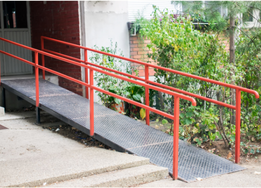
Home modifications can range from simple additions like grab bars and lift chairs to major renovations such as ramps, widened doorways, or bathroom remodels. The goal is always the same: enable safe, independent daily living and reduce the risk of re‑injury.

At Comp‑X, the process begins with a comprehensive assessment. We assemble a team of construction and rehabilitation experts who collaborate with our specialized care coordinators, supported by clinical oversight from our clinical director, a certified case manager and registered nurse. Only licensed, bonded, and insured contractors are used to ensure quality and reduce liability. All recommendations undergo review for medical necessity and fair pricing.

A key step is the live video assessment, involving the injured worker, caregiver, contractor, and claims team. This collaborative approach provides accurate progress reports and helps catch issues early. Once complete, we conduct an injured worker satisfaction review to confirm usability and quality.

Industry best practices emphasize the importance of early evaluation, clear communication, and strong project coordination, areas where Comp‑X excels through our U.S.-based team and 24/7 support.

Examples of accessible home ramp (permanent and temporary), enabling safe entry for wheelchair users.

Vehicle modifications: ensuring safe mobility on the road

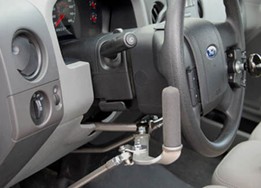
Vehicle modifications are equally critical for workers regaining independence. These can include left-foot accelerators, hand controls, or ramps for wheelchair access, helping injured employees return to driving and work.

We begin with an assessment by a driver rehabilitation specialist. This includes visual, perceptual, and cognitive screenings, plus evaluations of wheelchair seating and driving capabilities with adaptive equipment. Once approved, we perform a full vehicle fitting and apply modifications.

Throughout, our team oversees compliance with ADA, Certified Aging-in-Place Specialists (CAPS), and National Association of Home Builders (NAHB) standards. This helps to ensure modifications are appropriate, cost-effective, and safe.

Best practices across the industry highlight the importance of early intervention, thorough documentation, and the use of virtual tools to streamline assessments, all of which support better outcomes and faster return‑to‑work timelines.

Vehicle hand controls, a common adaptation for drivers with mobility challenges.

Partnering with Comp-X for seamless solutions

At Comp-X, we’re more than a vendor, we’re an extension of your team. Our nationwide network, direct contracting, and focus on prospective care management mean faster resolutions and fewer disputes. We handle everything from permits to certifications, ensuring compliance and cost control.

As a certified MWBE, we’re committed to delivering reliable, U.S.-based support without the hassles of overseas call centers. Claims professionals and nurse case managers appreciate our accessibility, even after hours, and our dedication to quality outcomes.

Comp-X believes life begins at home. Let us help restore that for the injured workers you serve.

Ready to simplify your next modification referral? Contact us at 1-888-777-9022 or [email protected] to get started.

Team Member Spotlight: Allison Neal

Team Member Spotlight: Allison Neal

Since joining Comp‑X earlier this year, Allison Neal, RN, CCM, has brought a blend of clinical depth, operational insight, and genuine compassion to her role as Director of Clinical Services. With more than a decade of experience spanning emergency care, hospice, rehabilitation, and workers’ compensation, Allison has built her career around advocating for patients and elevating the quality of care they receive. At Comp‑X, she provides clinical oversight for our nationwide, ancillary healthcare services. Her approach is rooted in high-quality, cost‑effective care that improves outcomes and supports faster, safer return‑to‑work timelines. She is known for optimizing workflows, strengthening provider relationships, and fostering seamless collaboration among claims professionals, clinicians, and injured employees.

Before joining our team, Allison served as a Telephonic Nurse Case Manager with Sedgwick, partnering with national employers and public‑sector entities to resolve complex medical issues and guide treatment plans. Her earlier experience as an Emergency Room Nurse, PACU Nurse, and Hospice Case Manager shaped her commitment to patient advocacy, symptom management, and interdisciplinary teamwork. As a licensed Registered Nurse (RN) in Maryland and a Certified Case Manager (CCM), Allison works closely with Comp‑X’s leadership to expand service lines, implement evidence‑based guidelines, and enhance clinical partnerships nationwide. Her vision is simple and powerful: ensure every patient receives compassionate, coordinated care that supports recovery, safety, and long‑term wellness.

Get to know Allison

What excites you most about joining Comp‑X Medical? “The opportunity to lead and shape clinical services that directly improve outcomes for injured workers while supporting payers and employers with high‑quality, compliant care.”

Hobbies: Tennis and pickleball

Favorite quote: “Surround yourself with great people.”

Three words that describe her: Curious, compassionate, resourceful

Favorite team: The Baltimore Ravens

Most rewarding experience: Serving as a hospice nurse, where she supported patients and families during end‑of‑life care—an experience that deepened her compassion and strengthened her ability to lead courageous conversations.

Allison’s career has been built on advocating for patients and fostering meaningful collaboration across the care continuum. Her work at Comp‑X reflects that same commitment to thoughtful, coordinated care and we’re proud to have her helping lead the way.

Comp-X Medical: A Trusted Partner in Managed Care Coordination

Comp-X Medical: A Trusted Partner in Managed Care Coordination

Comp-X Medical is a managed care organization dedicated to improving outcomes for injured employees while helping clients navigate the complexities of workers’ compensation and ancillary healthcare coordination. With a strong focus on service, efficiency, and personalized support, Comp-X Medical has established itself as a reliable partner for organizations seeking better clinical and financial results.

At the core of Comp-X Medical’s approach is a commitment to simplifying the coordination of non-clinical healthcare services. The company manages every step of the process, from referral to service completion, ensuring injured workers receive the support they need while claims professionals experience fewer delays and reduced administrative burden.

Comp-X Medical offers a comprehensive range of ancillary services designed to support recovery and streamline claims management. These services include transportation coordination, language and interpretation support, air and hotel accommodations for out-of-area care, durable medical equipment, home health services, diagnostic imaging, physical medicine coordination, and additional solutions such as modifications and repatriation services when required. This wide scope allows Comp-X to serve as a single point of contact for complex care needs.

What truly sets Comp-X Medical apart is its people-first philosophy. As a woman- and minority-owned business, the company places a strong emphasis on personalized service, cultural awareness, and responsiveness. Clients and injured workers alike benefit from a hands-on approach that prioritizes clear communication, accountability, and compassionate support throughout the recovery process.

Comp-X Medical works closely with a broad network of professionals across the workers’ compensation ecosystem. Its clients include adjusters, nurse case managers, self-insured employers, third-party administrators, insurance carriers, state funds, legal firms, and healthcare providers. By collaborating with all stakeholders involved in a claim, Comp-X helps ensure services are delivered efficiently and in alignment with each client’s goals.

Another key differentiator is Comp-X Medical’s commitment to accessibility and reliability. The company provides 24/7, 365-day U.S.-based support, allowing clients and injured workers to reach a live representative whenever assistance is needed. This level of availability reinforces trust and helps prevent unnecessary delays in care.

Through experienced leadership, a comprehensive service offering, and a client-focused mindset, Comp-X Medical continues to raise the standard for managed care coordination. Its ability to balance quality service with cost-effective solutions makes it a valuable partner for organizations focused on improving outcomes, reducing claim complexity, and supporting injured employees on their path to recovery.

Ashley Palkewick Promoted to President and Co-Owner of Comp-X Medical

Ashley Palkewick Promoted to President and Co-Owner of Comp-X Medical

Matawan, N.J. – Feb 4, 2025 – Comp-X Medical, a leading provider of workers’ compensation ancillary services, today announced the promotion of Ashley Palkewick to president and co-owner. This strategic move reinforces the company’s commitment to expanding its presence in the workers’ compensation ancillary services market while enhancing its comprehensive suite of clinical and non-clinical healthcare services.

Palkewick, who has been an integral part of Comp-X Medical’s leadership team, brings 20 years of industry experience to her new role. Her proven track record includes significant contributions to the company’s operational excellence, provider network expansion, team development, and sales growth. As president and co-owner, Palkewick will work alongside CEO Christine Suarez-Loures and COO Leonard August to drive the company’s strategic vision forward.

“Ashley’s appointment as president and co-owner represents a pivotal moment in Comp-X Medical’s evolution,” said Christine Suarez-Loures, CEO of Comp-X Medical. “Throughout her ten-year tenure with Comp-X Medical, her exceptional leadership and deep understanding of our industry have been integral to our success, and in this expanded role, she will be instrumental in driving our continued growth and commitment to delivering unparalleled customer service to our partners and injured employees.”

This leadership enhancement aligns with Comp-X Medical’s strategic objectives to strengthen its market position and expand its service offerings while maintaining its focus on exceptional customer service and patient care. The company continues to invest in its infrastructure and team to meet the growing demands of the workers’ compensation market sector.

About COMP-X MEDICAL

Comp-X Medical is a leading national provider of ancillary health care. With a commitment to 24/7/365 availability and personalized service, Comp-X Medical’s U.S.-based team serves workers’ compensation carriers, third-party administrators, state funds, governmental entities, legal teams, and self-insured employers. By combining industry expertise with a personalized approach to care, Comp-X Medical delivers positive outcomes for injured employees nationwide. For more information, visit www.compxmedical.com or call 888.777.9022.